How Ghana's Tomato Farmers are Rewriting the Dry Season (Inside a $3.2 million push to reduce Ghana's tomato import dependence)
For years, the dry season meant one thing for tomato farmers across northern and middle-belt Ghana: watching their fields wither while the country's markets filled up with imported tomatoes. Tomatoes sit at the heart of the Ghanaian plate, making up 40 percent of what households spend on vegetables. Yet Ghana grows barely a third of the 1.4 million metric tons it eats each year. The rest comes across the border, at a cost the country can ill afford.
The reasons weren't a mystery: expensive inputs, poor seed, patchy irrigation, and too little hands-on support for farmers trying to do better. The result was a national average yield of about 8 metric tons per hectare less than half of the 20 metric tons the crop can realistically produce with up to 60 percent of every harvest lost before it ever reached a market.
That is the story the Food System Resilience Project (FSRP) set out to change, backed by a $3.2 million grant from the Government of Norway, channeled through the World Bank and administered by Ghana's Ministry of Food and Agriculture. Two dry seasons in, the results are hard to argue with. To date $2.26 million of the $3.2 million has been deployed. (Read on to see how the remaining $0.94 million will be deployed.)
During the 2024/25–2025/26 dry season, more than 1,200 farmers across 20 districts from Bawku West to Talensi in the Upper East to Nkoranza South to Asunafo South to Ningo Prampram further south put tomato seeds in the ground on 543 hectares of land. What came out of the ground tells the story best:
Tomatoes harvested | 5,613 metric tonnes |
Revenue generated | GHC 24.5 million+ |
Average yield before the project | 4–5 tonnes/hectare |
Average yield after the project | 11 tonnes/hectare |
Average gross margin before | GHS 4,555 per hectare |
Average gross margin after | GHS 14,150 per hectare |
Behind every one of those figures is a farmer who traded guesswork for a protocol nursery management, pest-proof netting, precisely timed transplanting, and post-harvest handling that keeps fruit saleable for longer. Delivering that training took a coalition: FSRP, the Directorate of Agricultural Extension Services, the Directorate of Crop Services, the Plant Protection and Regulatory Services Directorate, Centre for Scientific and Industrial Research (CSIR's) Crop and Soil Research Institutes, the World Vegetable Centre, and the regional and district agricultural teams all working alongside the farmers themselves.
Better Seed, Better Fruit
Quality used to be the industry's quiet crisis. Most farmers were replanting seeds saved from local harvested varieties like "Konko" and "No Name" tomatoes that were watery, bruised easily, and spoiled within four to six days of harvest. The project's answer was to put improved, locally released varieties into farmers' hands: CRI-Kwabena Kwabena and CRI-KOPIA from Ghanaian research, alongside hybrids like Sika F1 and Raja F1.
The difference showed up fast. When members of the Ghana National Tomato Traders and Transporters Association (GNTTTA) toured farms in the Upper East Region, their verdict was straightforward: The chairman of GNTTTA said “the new varieties met market requirements, and the produce was good enough to sell with confidence”. FarmMate Ltd, a processor that later partnered with the project in the 2nd year, tested the fruit and found Brix (sugar content) readings of 6.0 to 6.5 squarely in the range needed for puree and paste production. FarmMate is poised as a rapidly growing aggregator and processor of tomatoes partnering with FSRP.
The Toolkit: What Actually Changed in the Field
Rather than one silver bullet, the project bundled together a set of practical, climate-smart practices that farmers could adopt together:
● Smart seed varieties: bred to hold up under the heat and stress of dry-season growing.
● Netted nursery beds: keeping young seedlings shielded from pests before they ever reach the field.
● Precision transplanting: moving seedlings at the right time of day: early morning or late evening to reduce shock.
● Organic fertilizer: rebuilding soil structure alongside chemical inputs.
● Specialized fertilizer blends: formulated with calcium, magnesium and micronutrients to stop flowers from aborting in the heat and to firm up ripening fruit.
● Mulching: cutting water loss, moderating soil temperature and reducing labour.
● Staking: keeping plants upright and fruit off the ground to enhance shelve life.
● Timed harvesting: picking at the breaker stage to match what buyers actually want.
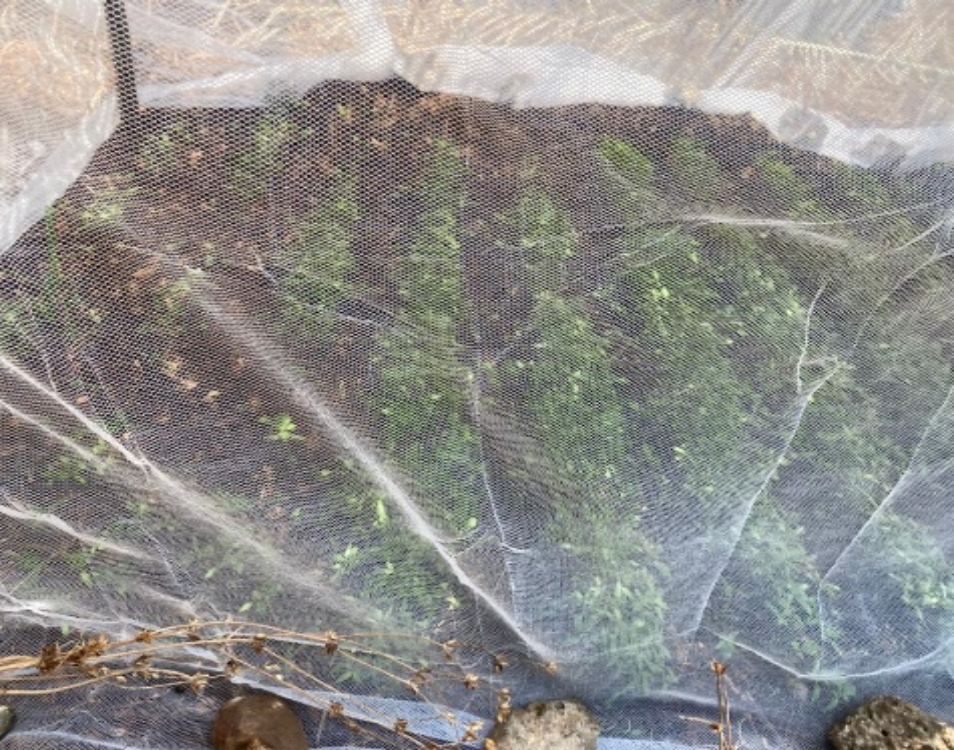
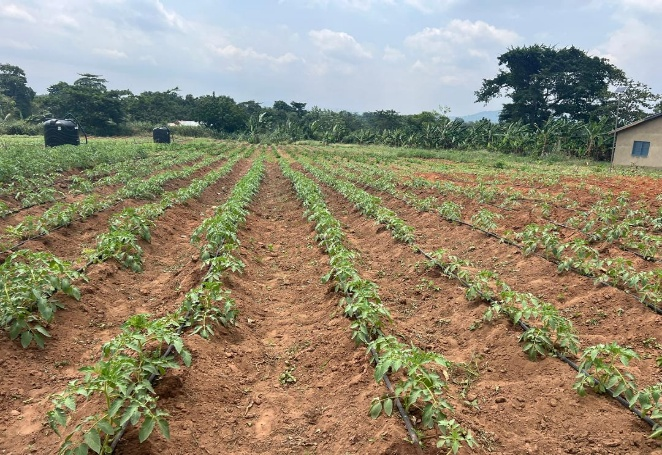
Fig1: Netted nursery and transplanted field
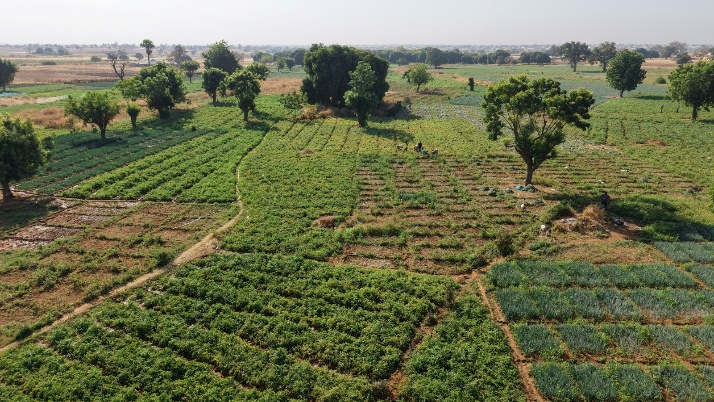
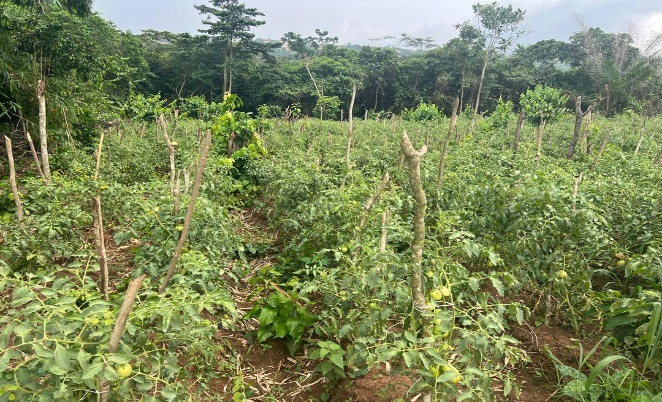
Fig 2: Aerial view of dry seasosn tomato field and a field showing the tomato crops with stakes
More Women in the Field
The project is also purposefully aiming to close the gender gap in tomato cultivation in the dry season. Women now make up 22 percent of participating farmers, up from less than 10 percent before the intervention and the project has set its sights on 40 percent participation by the time it closes. It's a small statistic with a big implication: dry-season tomato income, once almost entirely a male domain, is starting to open up as a livelihood for women and youth too.
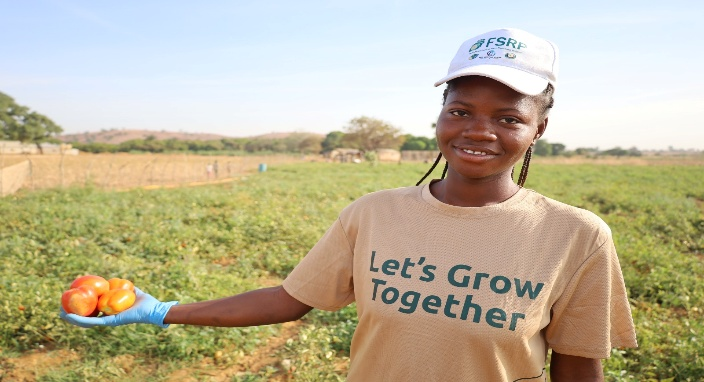
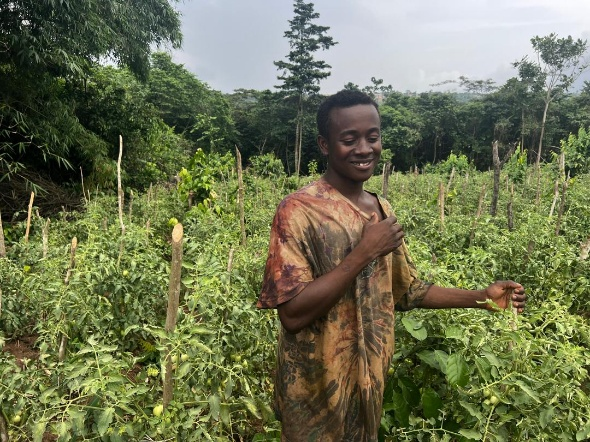
Fig 3: Youth in dry season tomato production
Getting Tomatoes to Market and Building Sustainability in the Value Chain— Without Losing Them First
Growing a better tomato means little if it rots before reaching a buyer. In its first year, the project brought the GNTTTA directly onto the farms, building trust and confirming that the new varieties matched what traders wanted. In year two, it went further, partnering FarmMate Ltd as a guaranteed offtaker.
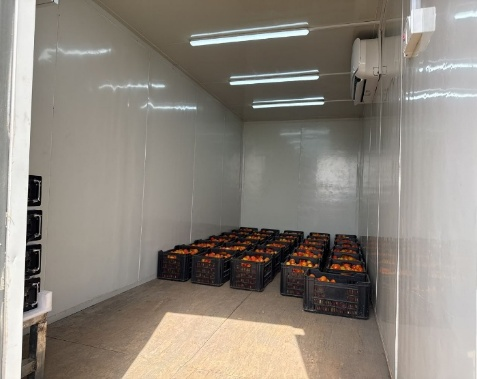
Fig 4: Harvested tomatoes in plastic crates being parked into the on- farm solar powered storage chamber where fruits are kept before transported to AccraFarmMate's model paired fair pricing with real infrastructure: weighing scales instead of guesswork, durable plastic crates instead of sacks that bruise fruit, and solar-powered cooling chambers on-farm to slow spoilage before transport. The price difference was stark, offtakers paid GHS 7 to 10 per kilogram, against GHS 3 to 5 from traditional traders. Today, 80 percent of tomatoes harvested meet top-grade quality standards, commanding the premium prices to match.
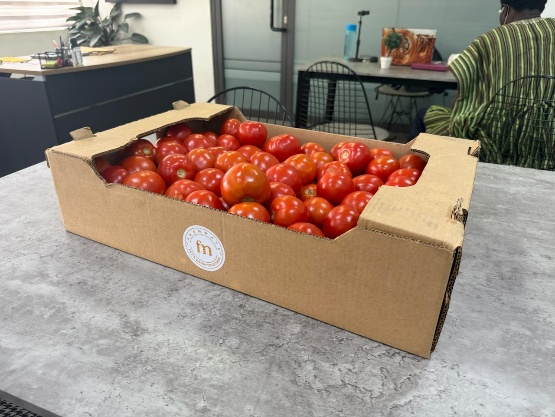
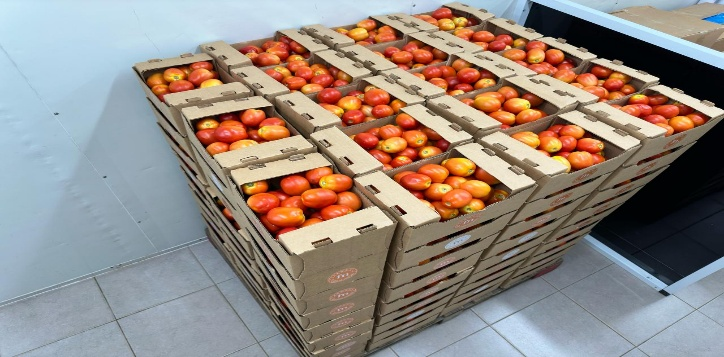
Fig 5: Packed fruits by FarmMate to be sold at the suppermarket
Rebuilding the Seed System from the Ground Up
None of this works without a reliable seed supply, which is why CSIR's Crop Research Institute has spent the past two seasons rebuilding Ghana's breeder and foundation seed stock for the Kwabena Kwabena and KOPIA varieties the open-pollinated lines behind the project's improved seed.
By March 2026, CSIR-CRI had produced 6.2 kg of breeder seed and hit its full 20 kg target for foundation seeds, 10 kg each of CRI Kwabena Kwabena and KOPIA. That may sound modest, but breeder and foundation seeds are the base of the pyramid: every kilogram multiplies many times as it moves down the chain toward the certified seed that farmers actually plant. Hitting these targets clears the way for large-scale certified seed multiplication in the seasons ahead.
What the Trial Plots Proved
To prove the new varieties weren't just better on paper, CSIR-CRI ran adaptive trials across three Upper East communities, comparing CRI-KK and CRI-KT against the local farmer check variety. The gap was hard to miss: - at Zone P in the Tono Irrigation Scheme in the Kassena-Nankana Municpality, the improved varieties yielded over 20 tonnes per hectare against just 8.33 tonnes for the local check — better than a two-and-a-half-fold jump. Similar, if slightly smaller, gains showed up at Bonia and at Gbeo in the Talensi District, where yields more than doubled.
The improved varieties also flowered and matured earlier and grew taller than the local check: - real agronomic advantages, not just a one-season fluke. There was a trade-off worth noting: CRI-KK showed a higher rate of bacterial wilt infection (48 %) than CRI-KT (31 %) or the local check (21 %), a signal that disease resistance is the next frontier for breeding work.
What Still Stands in the Way
The project has been candid about the obstacles that remain. An unusually hot minor season from December to March dried up many of the water sources dry-season farmers depend on. Soil samples from eighteen fields in the middle belt came back positive for bacterial wilt, fusarium, or root-knot nematodes. In the Upper East, farmers lost hours guarding their fields against free-ranging livestock during the traditional grazing period. Due to the small sizes and scattered nature of farm plots, aggregating produce for transportation remains expensive and inefficient.
Where This Goes Next
The project's response to these challenges is already taking shape: solar-powered micro-irrigation with fencing to protect both water access and crops from livestock; a stronger push toward clustering farms to simplify aggregation; new adaptive trials of bacterial-wilt and heat-tolerant varieties across the southern, middle, and northern belts; and proposals to donor partners to fund and scale up the intervention's next phase. This first scale up will be supported from the remaining $0.94 million resources left from the Norwegian grant.
The long-term vision is tomato self-sufficiency for Ghana fewer imports, steadier prices, and a stronger economy built on tomato production all year round.
What started as a response to a seasonal supply gap has become something larger: proof that with the right seed, the right training, and a guaranteed buyer at the end of the season, dry-season tomato farming can go from a gamble to a genuine livelihood. The Food System Resilience Project's real achievement isn't just the tonnage or the revenue, it's the resilience, empowerment, and transformation now taking root across Ghana's tomato belt. The project has secured to an additional US$ 20 million grant from the Dutch Ministry of Foreign Affairs to scale up this initiative and build on the results moving forward.




Leave a comment
Comments (0)
No comments yet. Be the first to comment!